
Silver Spring Employment Litigation Lawyer
Eric Siegel Law has handled employment litigation in Maryland and Washington, D.C. for more than three decades.
Employees who live and work in Silver Spring may have claims that touch multiple jurisdictions depending on where their employer is headquartered, where the work is performed, and which laws apply to their situation. Our Silver Spring, MD employment litigation lawyer at Eric Siegel Law has more than 30 years of experience litigating workplace disputes across Maryland, Washington, D.C., and federal courts. We represent employees facing discrimination, retaliation, wrongful termination, wage violations, and other workplace claims. Contact us to talk through what you’re dealing with.
Employment Litigation Lawyer Silver Spring, MD
Employment litigation is the process of resolving workplace disputes through formal legal proceedings, whether that’s an administrative agency charge, state or federal court, or arbitration. It covers a wide range of claims, from discrimination and harassment to unpaid wages and whistleblower retaliation, and the path a case takes depends on the nature of the claim, the employer, and the agreements in place.
Depending on the circumstances, a single workplace dispute may implicate federal law, Maryland law, or D.C. law, and the procedural requirements, deadlines, and available remedies can differ meaningfully across those frameworks. Working with an attorney who regularly practices across all three gives employees a clearer picture of which claims are available and where they’re best pursued.

Types of Employment Litigation Cases We Handle in Silver Spring
Eric Siegel Law represents employees in a range of workplace disputes throughout Silver Spring and the surrounding area. The following are the primary case types we handle.
- Discrimination claims. As employment litigation lawyers, we represent employees who have experienced adverse employment actions connected to race, sex, age, disability, gender identity, national origin, and other protected characteristics. Building a discrimination case requires identifying the right legal theories, gathering the right evidence, and understanding the procedural requirements of the applicable forum.
- Workplace retaliation. Employees who report unlawful conduct or participate in workplace investigations are legally protected from employer retaliation. When an employer responds to protected activity with adverse action, that conduct can give rise to a claim that stands on its own.
- Civil rights litigation. Civil rights violations in the workplace go beyond standard discrimination claims and can involve broader constitutional and statutory protections. Our firm’s background in civil rights litigation is directly relevant to these cases.
- Wrongful termination. Maryland is an at-will employment state, but that doesn’t make every termination lawful. We handle wrongful termination claims where the discharge was connected to discrimination, retaliation, or a violation of public policy.
- Whistleblower claims. Employees who report fraud, regulatory violations, or other misconduct are protected under multiple federal and state laws. We represent whistleblowers who have faced termination, demotion, or other adverse action after speaking up.
- Wage and hour disputes. Unpaid overtime, minimum wage violations, and employee misclassification are among the most common wage and hour disputes we handle. Silver Spring employees working for employers with operations in multiple jurisdictions may have claims under more than one body of wage law.
- Sexual harassment. We represent employees in both quid pro quo and hostile work environment sexual harassment claims, from the initial complaint stage through litigation if necessary.
- Disability accommodations disputes. Employers have legal obligations when an employee requests a reasonable accommodation. When those obligations aren’t met, affected employees may have viable claims for failure to accommodate or disability discrimination.
Why Choose Eric Siegel Law for Employment Litigation in Silver Spring, MD?
Practicing Across the Jurisdictions That Matter to Silver Spring Employees
Eric Siegel is admitted to practice in Maryland, the District of Columbia, and New York, and holds memberships in multiple federal courts, including the U.S. District Courts for the District of Columbia, the U.S. Court of Appeals for the D.C. Circuit, the Fourth Federal Circuit, and the U.S. Court of Claims. That range of admissions means we can follow a case wherever it needs to go without handing it off or bringing in outside counsel.
Eric founded Eric Siegel Law after more than three decades of litigating complex civil, employment, and commercial matters. He began his career as a trial attorney with the U.S. Department of Justice, Civil Rights Division, which shaped both his litigation approach and his understanding of how workplace civil rights claims are built and presented.
A Record That Reflects Actual Litigation Experience
Eric holds a Martindale-Hubbell AV Preeminent Rating, the highest peer-reviewed evaluation for legal ability and professional conduct. He has been recognized by Best Lawyers and was named to the Top 100 Jury Verdicts in Labor & Employment by TopVerdict.com in 2022. He earned his J.D. from UCLA School of Law and is a member of the Maryland State Bar Association and the Bar Association of the District of Columbia.
Credentials matter in employment litigation because they reflect how an attorney is regarded by opposing counsel and the courts. For Silver Spring employees pursuing claims in employment litigation matters across multiple forums, working with a lawyer whose record commands that kind of professional recognition affects how the other side approaches the case.
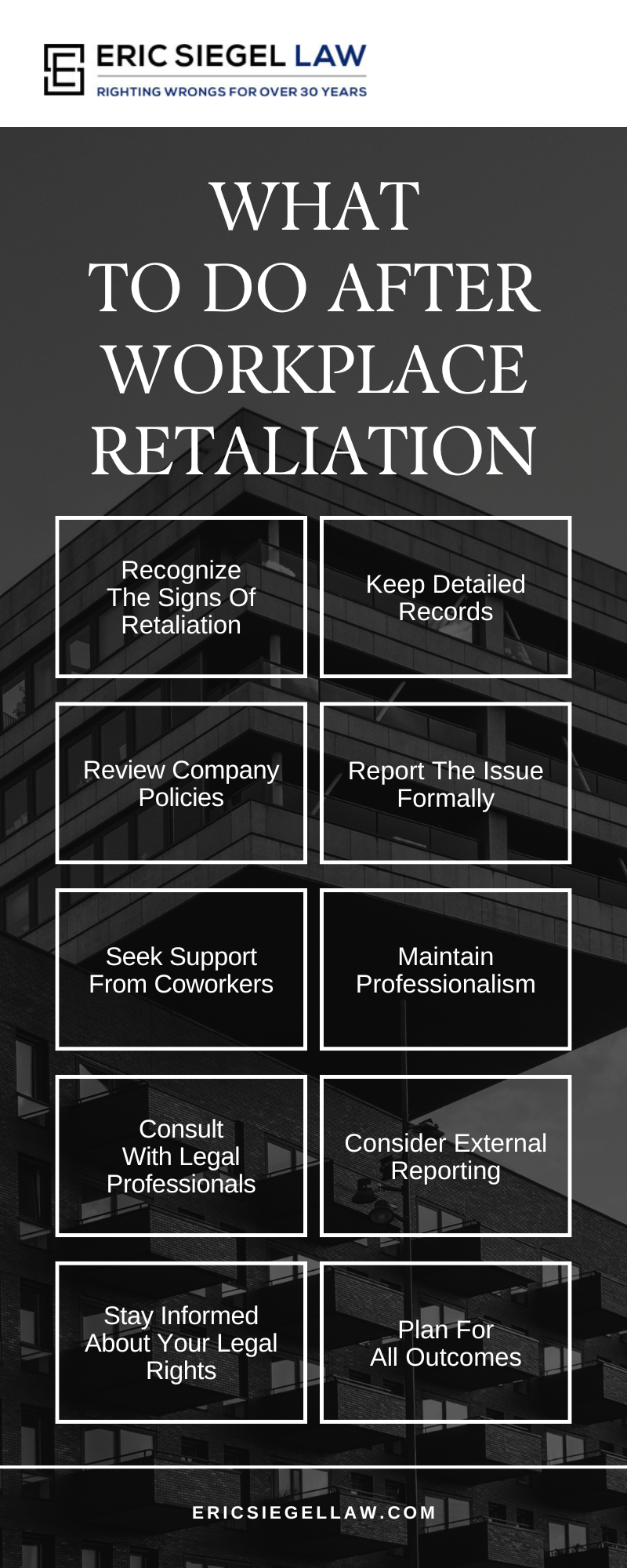
Silver Spring Employment Litigation Infographic
Understanding Employment Litigation Cases
Claims, Proof, and What Employees Need to Know
Employment litigation draws on federal law, state law, and in some cases local law, and the specific claims available depend on the employer’s size, location, and the nature of the conduct at issue. Understanding the basic legal framework helps employees make informed decisions about how and where to proceed.
Discrimination and harassment claims are built primarily on circumstantial evidence, including patterns of differential treatment, comparator employees, timing of adverse actions, and documentation of specific incidents. Direct evidence of discriminatory intent exists but is relatively uncommon.
Retaliation claims require connecting protected activity, such as filing a complaint or participating in an investigation, to an adverse employment action. The causal link between the two is often the central issue in these cases.
Wrongful termination claims in Maryland turn on whether the termination violated a specific legal protection, since the state’s at-will employment doctrine otherwise gives employers substantial discretion over employment decisions.
Wage claims depend heavily on payroll records, time-keeping data, and employment classifications. Employees working across jurisdictions may have claims under federal wage law, Maryland wage law, or both, with different remedies available under each.
A few things worth understanding before proceeding:
- Federal employment claims generally require filing a charge with the EEOC before a lawsuit can be filed. Those deadlines are strict and missing them can eliminate an otherwise valid claim.
- Maryland law provides protections that go beyond the federal baseline, and state court claims may proceed on a different procedural track than federal claims.
- Silver Spring employees whose employers also operate in D.C. may have additional legal options worth evaluating before deciding how to proceed.
- Documentation is consistently one of the most important factors in employment cases. Written records of discriminatory conduct, retaliation, or wage violations carry significantly more weight than memory alone.
Important Aspects of Your Employment Litigation Case
Employment disputes rely on facts, and the details that seem minor at the outset often become central as the case develops. A few practical considerations:
- Write down what happened as soon as possible, including specific dates, locations, witnesses, and the exact language used in relevant conversations or communications.
- Preserve all relevant documents, including emails, texts, performance reviews, and HR correspondence. Once a dispute is apparent, both sides have obligations around document preservation.
- Review any agreements you signed at the start of your employment. Arbitration clauses and non-disparagement provisions can significantly affect how and where your claim is resolved.
Employment Litigation Case Timeline
The timeline for an employment matter depends on the type of claim and the forum involved. In general terms:
- Case evaluation. Before anything is filed, we assess the facts, identify applicable claims across relevant jurisdictions, and evaluate the strength of the available evidence.
- Administrative proceedings. Federal discrimination claims require an EEOC charge before litigation can begin. Maryland state law claims may proceed through a separate administrative process.
- Filing and discovery. Once a lawsuit is filed, both sides exchange documents, take depositions, and build the evidentiary record. This phase is often where the outcome of the case is determined.
- Motions practice. Employers frequently file motions for summary judgment in employment cases. A well-built discovery record is the primary defense against those motions succeeding.
- Resolution. Many employment cases settle during or after discovery. Those that don’t are decided at trial by a judge or jury.
What to Bring to Your Employment Litigation Consultation
Coming in with organized materials allows us to give you a more useful assessment from the start. Bring what you have, including:
- Employment contracts, offer letters, or any agreements you signed
- Relevant communications, including emails, texts, and written correspondence with your employer or HR
- Performance reviews, disciplinary records, or documentation of the adverse action you experienced
- Records of any internal complaints you filed and responses you received
- A written account of key events, including dates, locations, and any witnesses you’re aware of
We’ll use what you bring to give you a clear read on where your case stands and what the realistic options are from here.
Maryland Legal Resources for Employment Litigation
If you’re involved in a workplace dispute in Silver Spring or the surrounding area, the following resources provide useful background on the relevant processes and legal landscape.
- The U.S. Equal Employment Opportunity Commission administers federal employment discrimination laws and handles charge intake for employees pursuing federal claims.
- The EEOC Baltimore Field Office serves Maryland employees, including those in Silver Spring and Montgomery County, for charge filing and related inquiries.
- The U.S. District Court for the District of Maryland handles federal employment litigation for Maryland employees.
- The Maryland Courts website provides civil filing information and case lookup tools for state court employment matters.
- The Maryland General Assembly website is the official source for Maryland statutes governing employment rights and workplace protections.
Reach Out to Eric Siegel Law to Schedule a Consultation
Employment disputes don’t wait for you to be ready, and the legal deadlines attached to them won’t either. Whether you’re dealing with a wrongful termination, a contract violation, or something else entirely, the window to protect your rights is narrower than most people think. Contact us to speak with our firm today.

Free Consultation
“Attorney Siegel was very responsive and thorough in his analysis of the issues which was presented. I liked his calm and professional demeanor. I would definitely recommend him to anyone seeking competent legal advice.”
Mackenzie M.